International Women’s Day 2026: Why We Need Care Economies
On International Women’s Day, we celebrate women’s resilience and leadership. But what if the real challenge is not asking women to give more, but redesigning our societies around care? This reflection explores burnout, inequality, and why care economies may hold the key to healthier, more sustainable societies.
Petra Heitkamp
3/9/20266 min read
When I was twelve or thirteen, I read a book that never quite left me. Kinderen van Moeder Aarde (Children of Mother Earth, 1985), by Dutch author Thea Beckman, imagines a society a thousand years after a global war. In the story, the surviving civilization on Greenland—Thule—is governed by women. The society is organized not around profit or power, but around cooperation, ecological balance, and care for one another.


At the time I simply loved the adventure. Looking back now, I realize the book described something deeper: what today we might call a care economy.
On International Women’s Day, I find myself thinking about that imagined society again. Around the world, International Women’s Day celebrates women’s resilience, leadership, and contributions to society. This year’s theme, “Give to Gain”, carries a powerful message: when society gives women equal opportunities, respect, education, and support, the entire world benefits. Empowering women strengthens families, communities, and economies.
Many women today experience what some call moral burnout—the exhaustion that comes when deeply held values collide with systems that are no longer functioning well. I have seen this firsthand in global health in 2025, where large-scale lay-offs and uncertainty have taken a heavy toll on people’s sense of purpose and stability.
At the same time, social media and digital life have transformed how we relate to one another. Younger generations report increasing loneliness and anxiety, something described powerfully in discussions about The Anxious Generation (2024).
Recent discussions have also pointed to a new phenomenon: an “ambition gap”. Not because women are less capable or motivated, but because many are increasingly questioning the return on investment for their labor. Rather than climbing traditional corporate ladders that remain slow to change, many women are building new pathways—through entrepreneurship, philanthropy, and new forms of leadership.

Not Just a Women’s Issue
A society that undervalues care harms everyone. In Canada, the government recently launched a national conversation on Men and Boys’ Health, highlighting a different but related challenge. Men are three times more likely than women to die by suicide, and many delay seeking medical care even when experiencing serious symptoms. Many boys and young men are increasingly isolated behind screens, struggling with online gambling, pornography, and loneliness. Poor mental health among men has enormous human and economic costs. Addressing it is not just a health issue but a societal one.
“When societies undervalue care, everyone pays the price—women, men, families, and communities.”
From Burnout to Care Economies
If burnout is not simply an individual failure, then the real question becomes: What kind of system do we need instead?
For decades, the dominant message was: Fix yourself. Work harder. Overcome the system.
But what if the system itself needs redesigning?
A growing number of people are now exploring the idea of care economy or wellbeing economy. These models challenge the assumption that economic success should be measured primarily by productivity or GDP growth. Instead, they ask a different question: What kind of economy helps people and communities thrive?
Care economies recognize that the activities sustaining life—raising children, caring for elders, supporting communities, protecting ecosystems—are not secondary to the economy. They are the economy.
“Care is not a cost to society. It is the investment that allows societies to thrive.”
This shift means moving away from purely individual solutions toward a culture of mutual care and systemic responsibility.
Imagining Systems Designed Around Life
Dutch author Joris Luijendijk asks himself on International Women’s Day a provocative question: What would happen if the labour market were designed by women? Would career paths follow a different rhythm? Would we see menstrual leave days, midlife sabbaticals, or greater opportunities for people returning to the workforce later in life? Would leadership peak just past midlife, when experience, wisdom, and mentorship are strongest? Would recruitment focus only on 20-year-olds—or also on 40-year-olds ready to contribute in new ways and return to the workforce when children are in school-age?
Imagining these possibilities reminds us that the systems we live in are not inevitable - they are choices.
A Lesson from a Twelve-Year-Old Reader
Perhaps the twelve-year-old version of me understood something before I had the words for it. The world imagined in Children of Mother Earth was not utopian simply because women ruled it. It worked because the economy was designed around care, cooperation, and the wellbeing of the community.
On International Women’s Day, perhaps the real question is not how much we should give. It is how we redesign our societies so that care, dignity, and wellbeing are recognized as the true foundations of prosperity.
Care is not a cost. It is the investment that allows societies to thrive.
I want to celebrate this International Women’s Day and applaud all the fantastic women in my life. A huge shout-out to everyone who continues to dream, build, and contribute to a better world. And especially to my incredible network of women whom I have had the privilege of working with over the past year, and those I've shared the WomenLift Journey with. Together, we are imagining—and building—the societies we want to live in.
[1] Are You There Judy? It’s Me … Midlife Margaret (Feb 2026), Suzanne Westover, Mental Health Commission Canada
Yet despite decades of progress, structural inequality remains stark. Globally, 133 million girls are still out of school. Forty percent of women live under restrictive abortion laws. Women earn on average 17% less than men, and only about 2% of philanthropic funding goes to organizations focused on women and girls.
Give More? Or Burn Out?
And while I appreciate the spirit behind the theme “Give to Gain,” it also raises an uncomfortable question. Haven’t women already been asked to give quite a lot?
More care. More resilience. More emotional labor. More unpaid work.
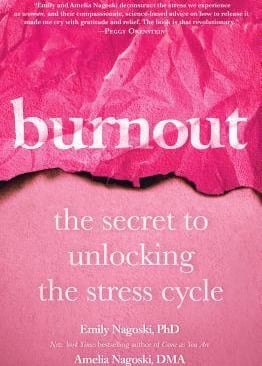
Burnout (2019) is often framed as a personal issue—something to solve with better stress management or individual resilience. But burnout can also be a signal that the system itself is misaligned with human needs.
“Burnout is not simply an individual failure. Often it is a signal that the system itself is not designed for human wellbeing.”
A recent Dutch book, De omwenteling: of de eeuw van de vrouw (The Transformation: or the Century of the Woman, 2022) offers an interesting example. In the 1960s, many women in the Netherlands experienced what was called the “housewife disease.” Large numbers were prescribed sedatives such as Valium to cope with depression and lack of purpose. Yet when laws changed in the 1970s and married women entered the workforce in greater numbers, this “disease” largely disappeared. What had been framed as a personal psychological problem turned out to be something structural.
Today, the pattern repeats itself in new ways I see around me.
Many women in North America juggle careers, partnerships, children (and their hobbies), and aging parents—often described as the “sandwich generation.”
Women were promised equality but inherited workplaces that had not yet adapted to support it. As one commentary[1] puts it: “Gen X women were promised equality, but they inherited a world that hadn’t changed to accommodate it.”
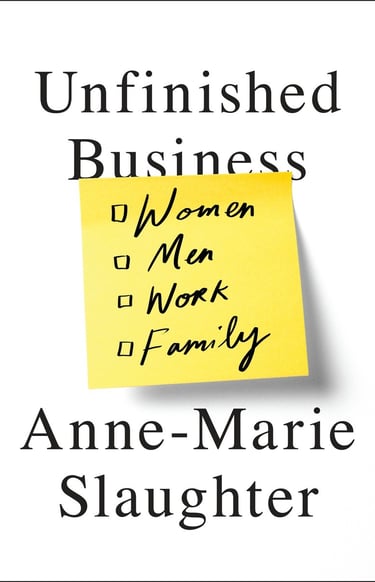
Women were encouraged to ‘lean in’—to work harder and push further—while structural supports like affordable childcare, pay equity, and flexible career paths lagged behind. Anne-Marie Slaughter describes this in 2015 in her book Unfinished Business. The result? A modern crisis of burnout.
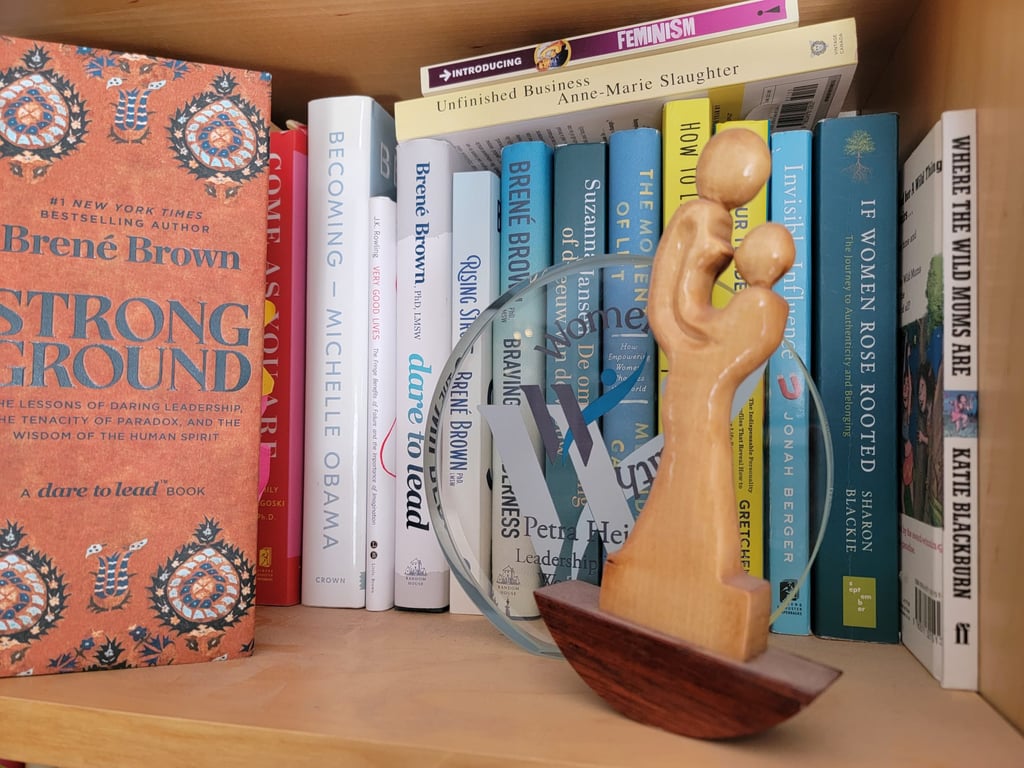
Taking you through some recent reads that have inspired me to write this Blog