People at the Center: Care Pathways for Populations at Higher Risk of Tuberculosis

This new Unitaid examines how TB systems, markets, and innovations often fail to reach the populations most affected — including children, migrants, miners, pregnant women, and people deprived of liberty — and explores how integrated, fit-for-purpose approaches can strengthen both equity and system resilience.

5/20/20261 min read

Why must TB innovation follow real-world care pathways?

Tuberculosis remains one of the world’s leading infectious killers, despite the availability of effective diagnostics and treatment. Yet millions of people continue to be missed every year — not because tools do not exist, but because health systems and markets are often not designed around the realities of where people live, work, and seek care.

In collaboration with Unitaid, iLINQ2 developed a new landscape analysis:
People at the Center: Care Pathways for Populations at Higher Risk of Tuberculosis.”

The report examines how children, migrants and displaced populations, miners, pregnant women, and people deprived of liberty face overlapping barriers across the TB care pathway — from screening and diagnosis to treatment and prevention.

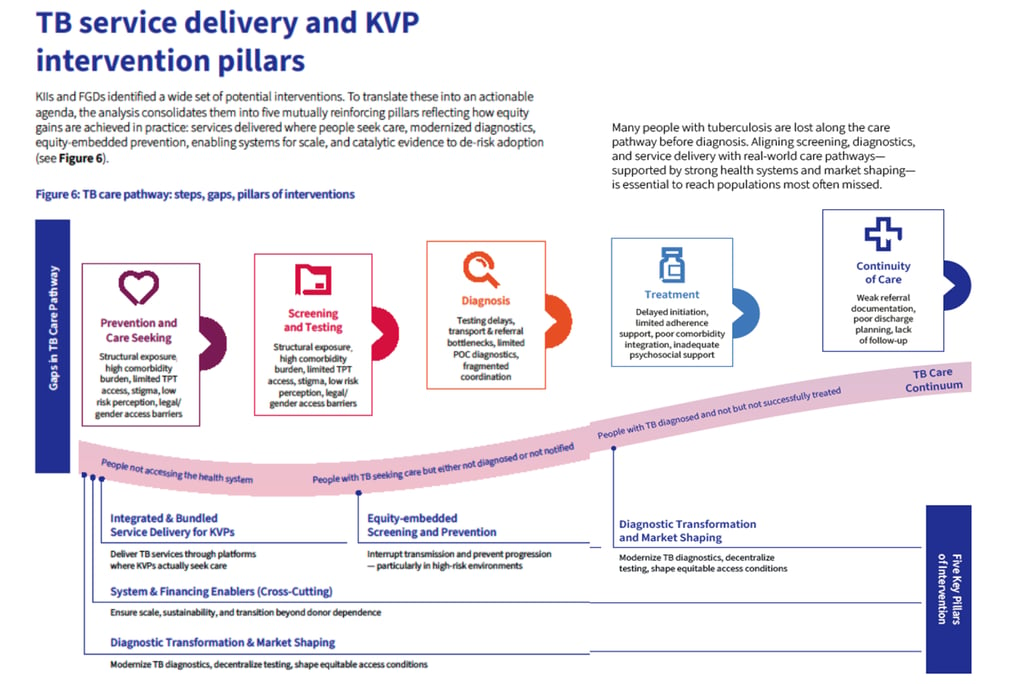
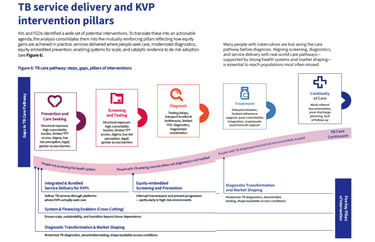
The analysis identifies five interconnected pillars along the TB Care continuum, that address major gaps:

  • decentralized and fit-for-purpose diagnostics,

  • integrated and bundled service delivery,

  • equity-centered prevention,

  • stronger system and financing enablers,

  • and catalytic evidence generation.

A central finding is that equity and efficiency are not competing objectives.

Key takeaways:

👉 Designing systems around the populations most often missed ultimately strengthens the entire TB response.

👉 Addressing riskfactors and conditions related to TB vulnerability, strengthens health system resilience, improves earlier diagnosis, and supports more sustainable epidemic control.

👉 Ending TB requires more than innovation alone — it requires systems intentionally designed to reach people where they live, work, and seek care

The report also highlights how lessons from HIV and hepatitis C — particularly around differentiated service delivery, decentralized care, and community-led approaches — can inform future TB responses.

For iLINQ2, this work reflects a broader commitment to supporting integrated, people-centered health systems that connect innovation, implementation, and equitable access.

Read the full report here:
https://unitaid.org/uploads/people-at-the-center-care-pathways-for-populations-at-higher-risk-of-tb.pdf

Grateful to all interview and focus group participants, partners, and collaborators who contributed to this work.